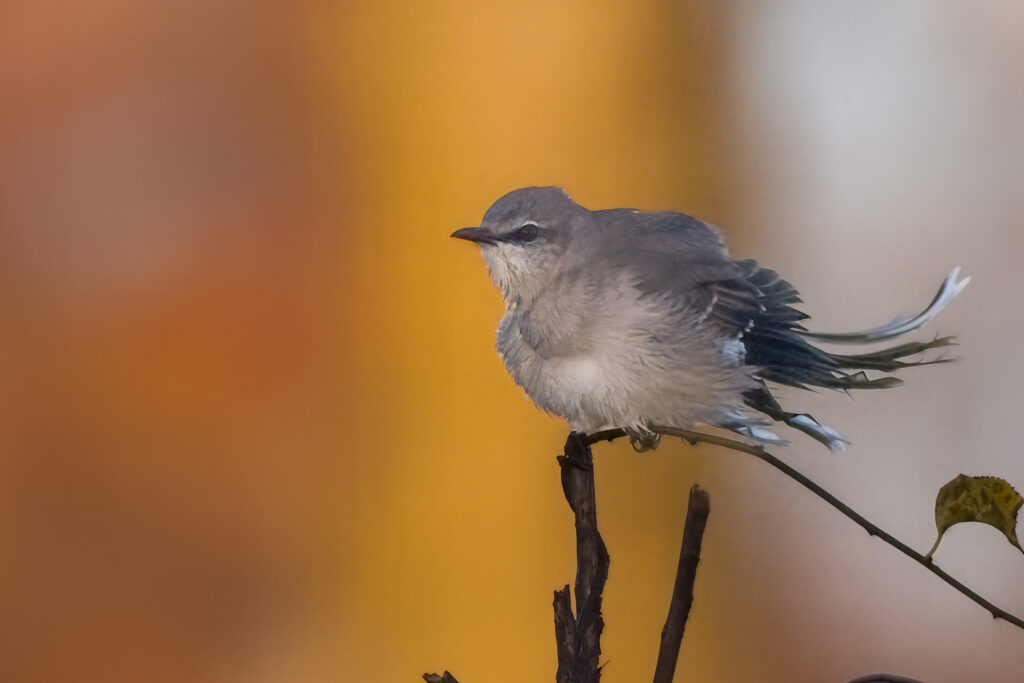
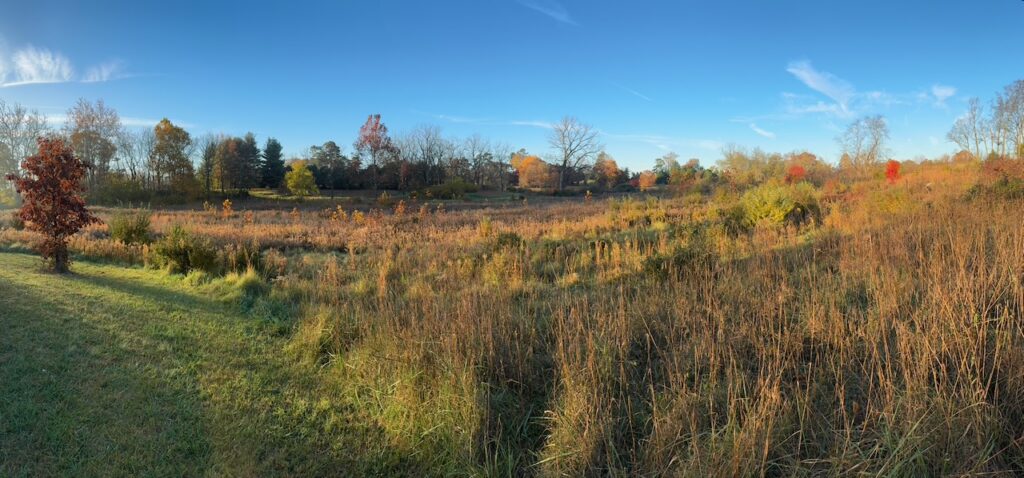
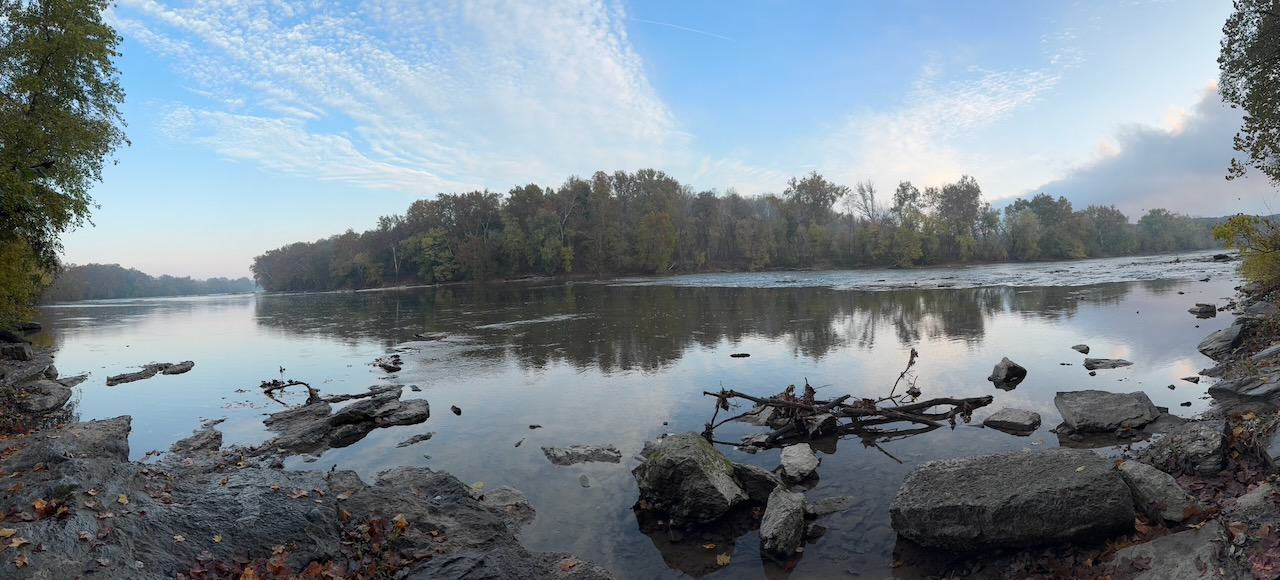
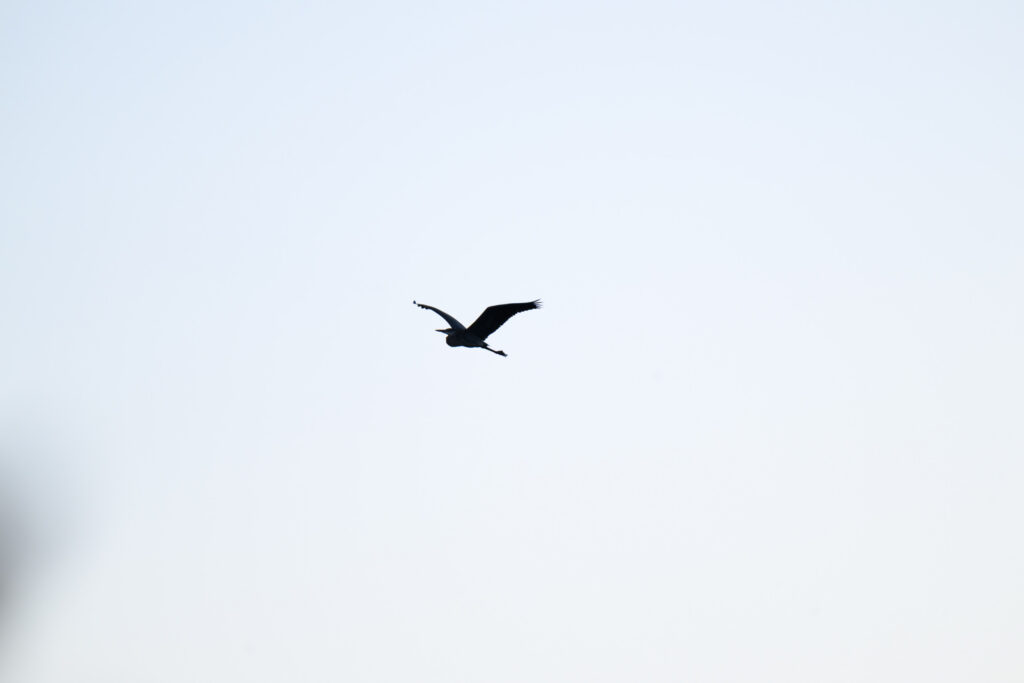
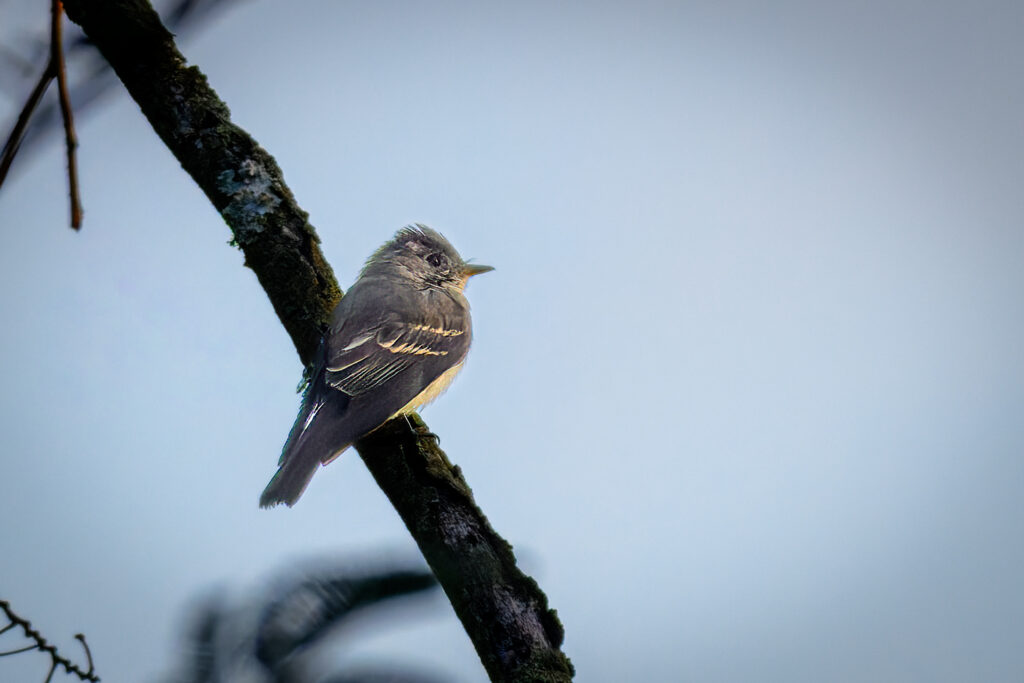
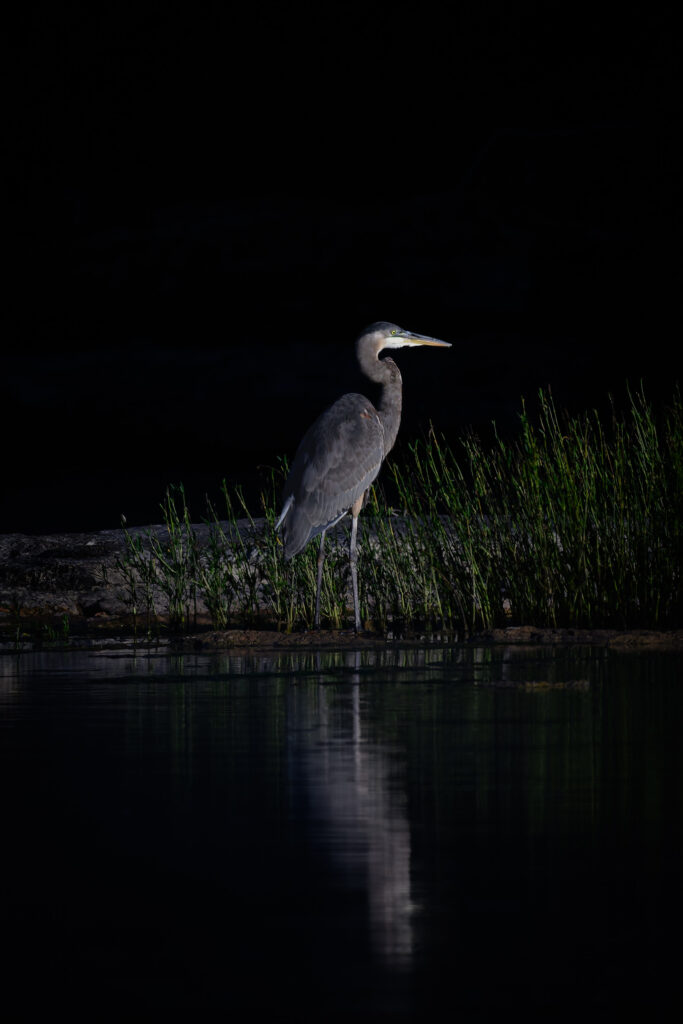
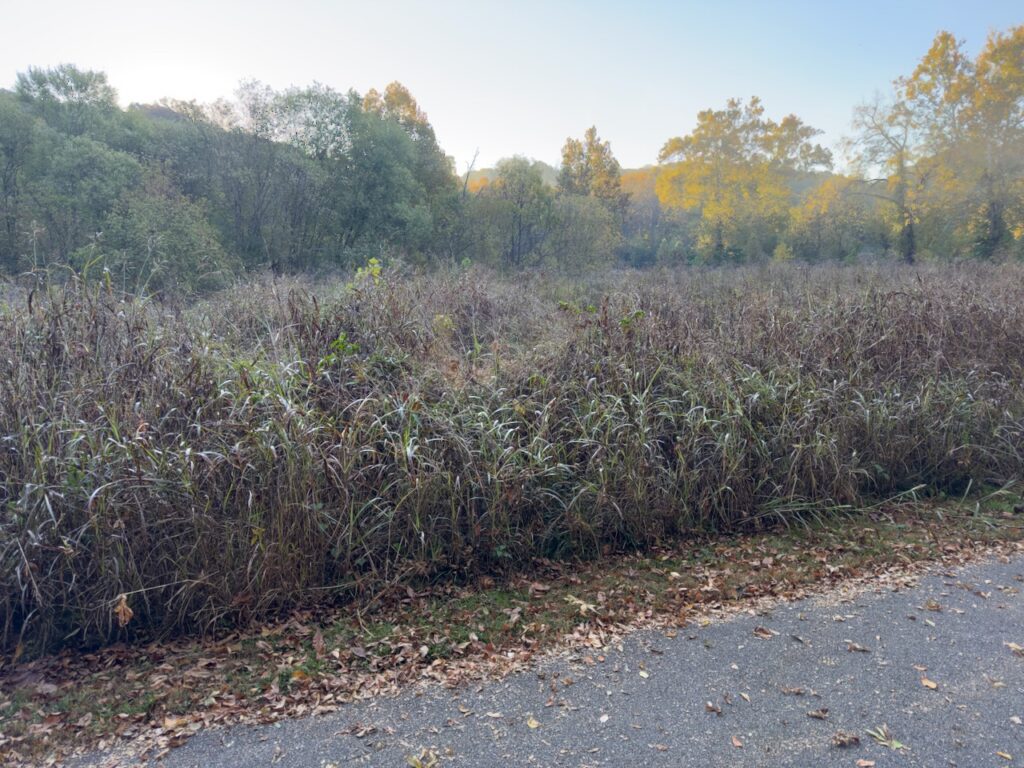
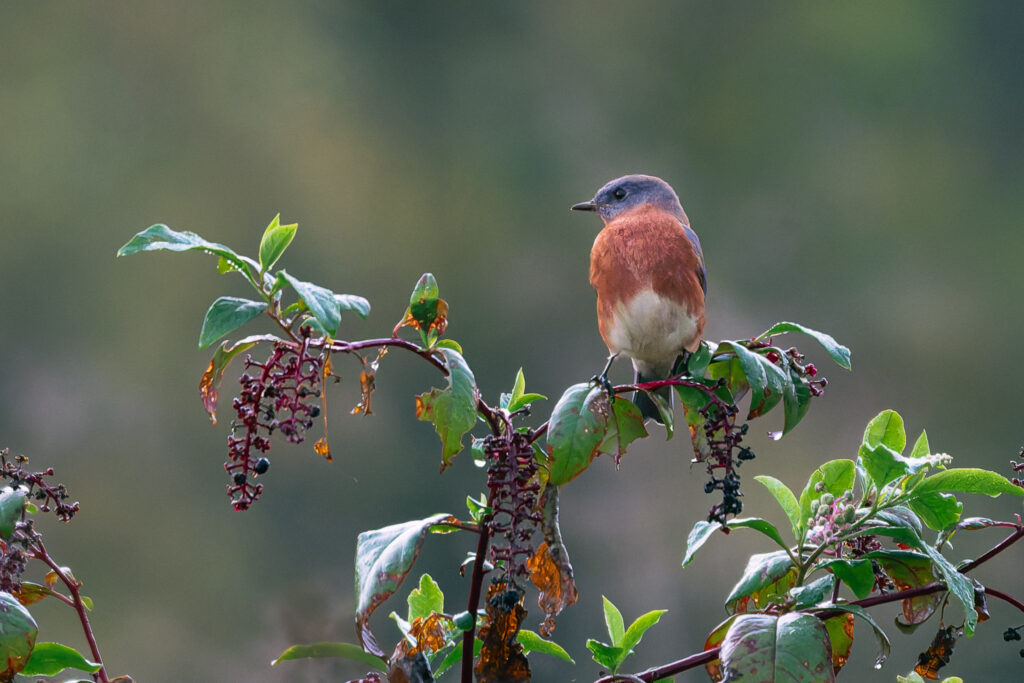
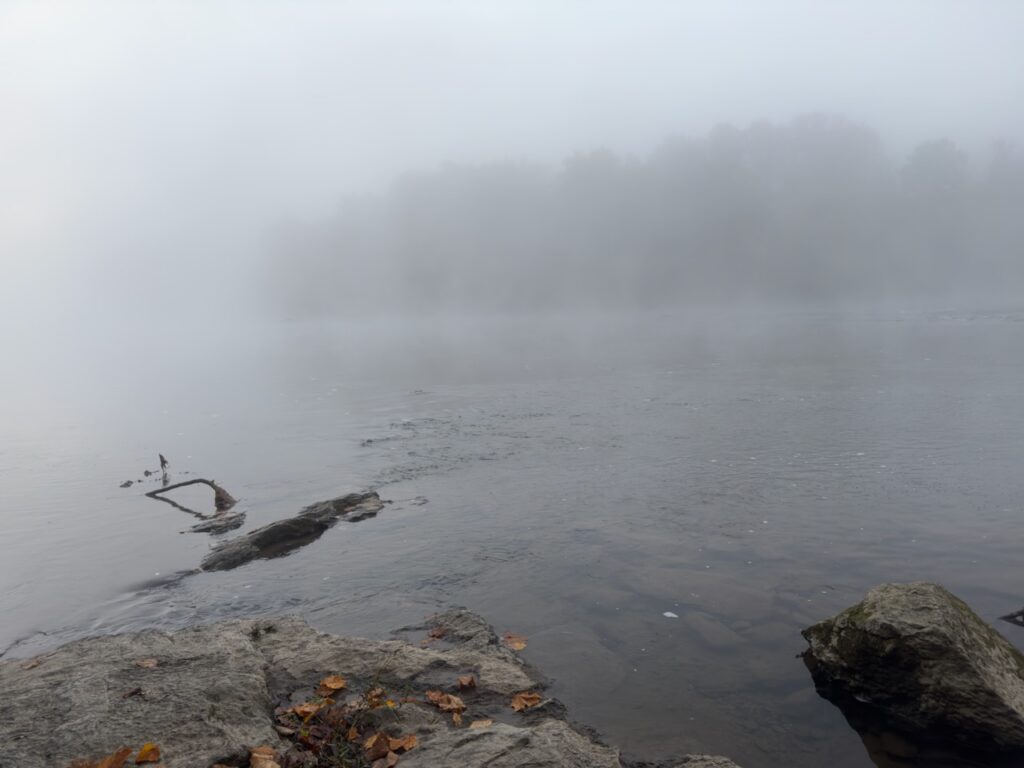
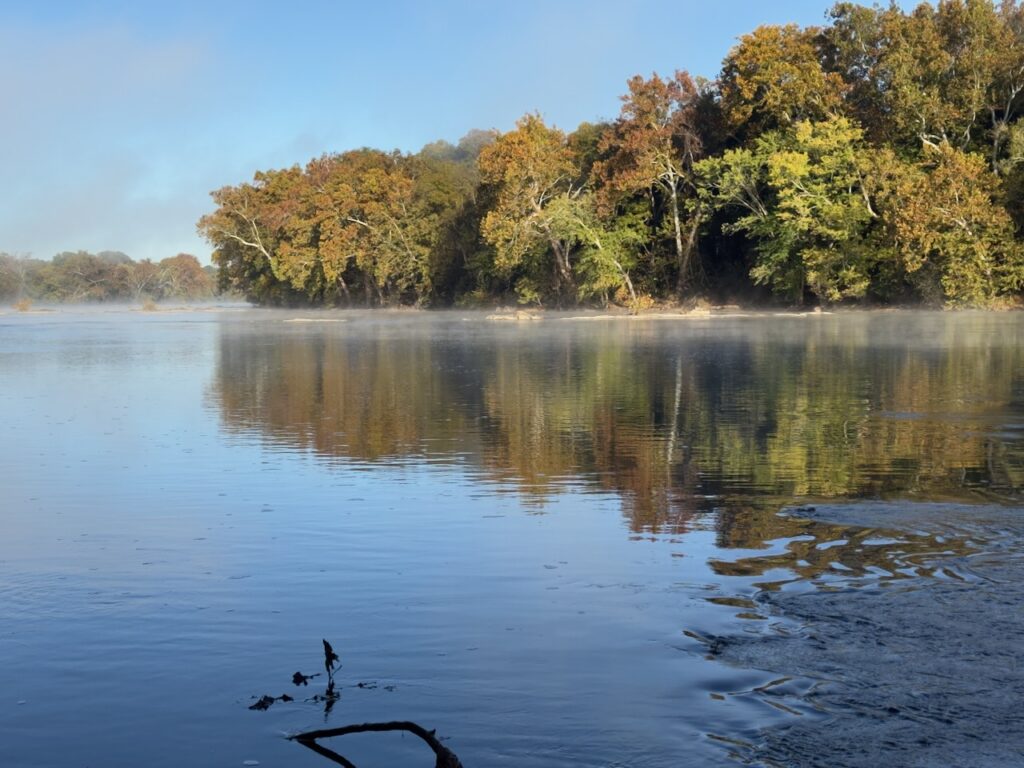
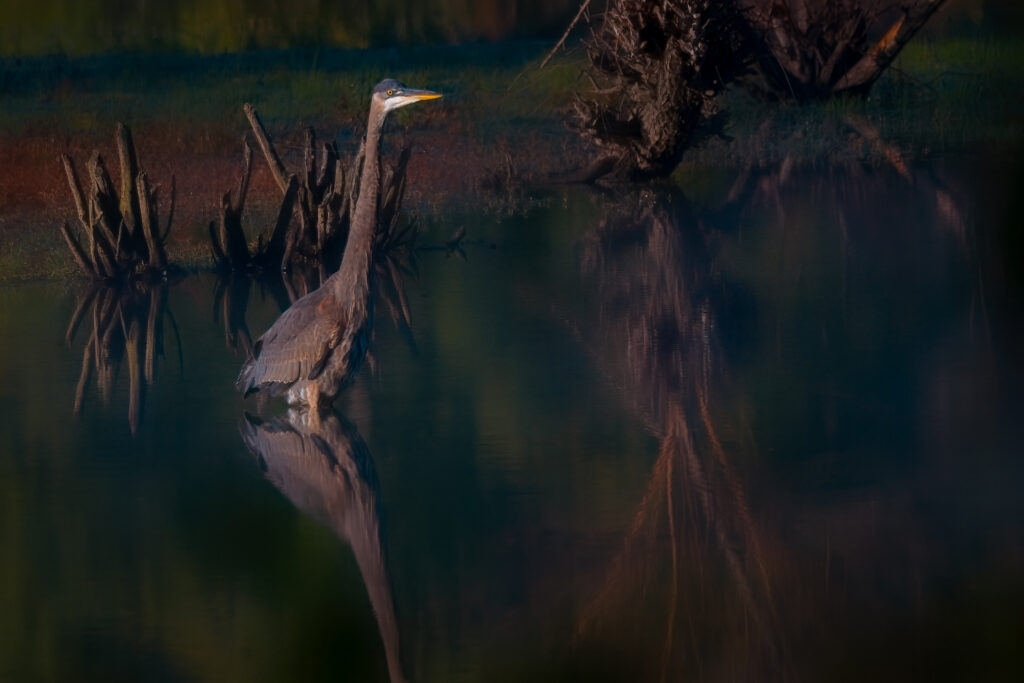
I returned to the State Arboretum of Virginia at dawn to give the meadow another try. It was a crisp 48 degrees with mostly clear skies. This time, I skipped my usual spots and went straight to the meadow, standing quietly for 45 minutes. Bird activity was sparse compared with my first visit, and I took very few photographs. Walking around the meadow brought little improvement, but I’m not ready to give up on it. The mix of vegetation still looks promising, even if the birds haven’t cooperated lately. Below are a view of the meadow and one of the few bird photographs I made this morning.
This was my first bird photography outing since Sunday’s time change. Arriving just after sunrise meant getting up an hour earlier by the clock—not an easy adjustment. I also chose Stauffer’s Marsh, a 40-minute drive and the farthest of my regular spots. It was a quiet morning, yielding a few photographs of perched sparrows and cardinals. A Pileated Woodpecker made an appearance but stayed too far away for a good photograph. I also met a fellow birder carrying binoculars, a lawn chair, and a notebook for recording species. The photography was uneventful, but it was nice to meet someone who shared an appreciation for the birds. It’s peaceful by the pond. I stood there for a while and relaxed as the Canada Geese floated by.
Friday was a bit disappointing. I went to the State Arboretum of Virginia for the second time in a week, which is unusual for me, but I was excited because I found a new meadow that really produced earlier in the week . I got my monopod out and stood by the meadow, and there was very little activity. I didn’t come away with even one good shot. I’ll try again later this week.
An artist starts with a blank canvas. A bird photographer chooses the canvas—and hopes the bird cooperates. Do I want a smooth wash of color behind the bird, an open blue sky, or a wider view showing its habitat? I’m learning that the background deserves as much attention as the subject. Here are a few things that have helped me.
Start with Separation
When I want to isolate a bird, I look for distance between it and the trees or shrubs behind it. A telephoto lens and a wide aperture help soften that background. I often shoot at 600mm, but focal length alone won’t make nearby branches disappear. Sky backgrounds offer a clean alternative, though exposure needs attention. A bright sky can leave the bird too dark. I add positive exposure compensation as needed while watching the highlights—a challenge I covered in my exposure article.
Choose a View, Then Wait
Once I find bird activity, I look for promising backgrounds and perches. Where could a bird land with distant foliage or open sky behind it? Birds rarely stay where I want them. One moment, branches hide the head; the next, the bird emerges into a clear opening. I follow its movements and wait for those brief opportunities. I don’t need every branch to disappear. I want the surroundings to support the photograph without competing with the bird.
Change Your Position
Sometimes the bird is well placed, but my viewing angle isn’t. A small step sideways or a lower shooting position can put a cleaner background behind it. I move slowly and watch how the bird responds. If it becomes uneasy, I stop. A better background isn’t worth disturbing it.
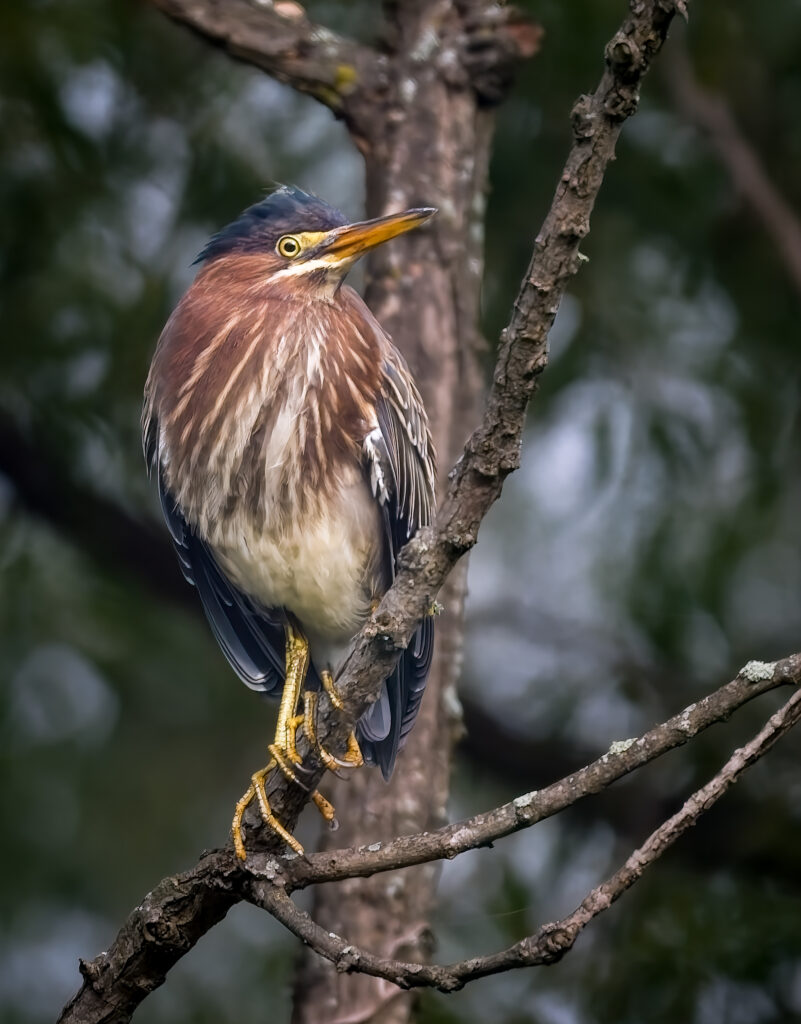
Green Heron before moving.
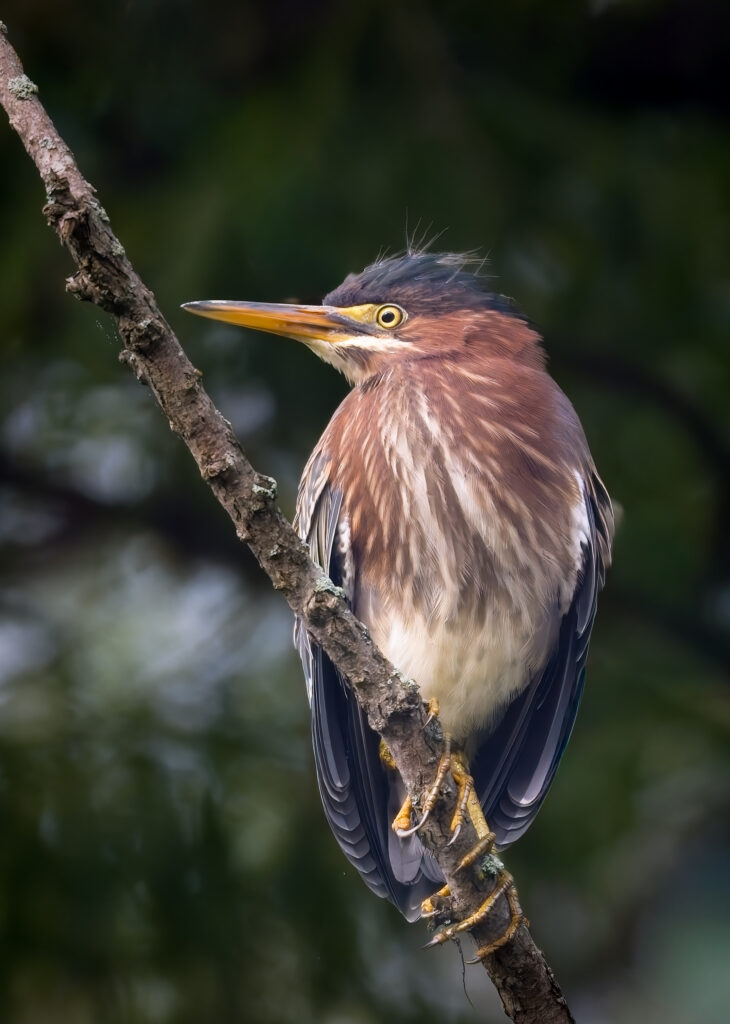
Green Heron after moving.
Check Around the Bird
I’ve photographed a bird against a beautiful background, only to discover later that a twig appears to grow out of its head. Before shooting, I try to check around the head, along the body, and near the frame’s edges. Bright patches, crossing branches, and other distractions are easy to overlook when I’m excited. Environmental photographs require the same care. Habitat adds context, but I still want the bird to be easy to find.
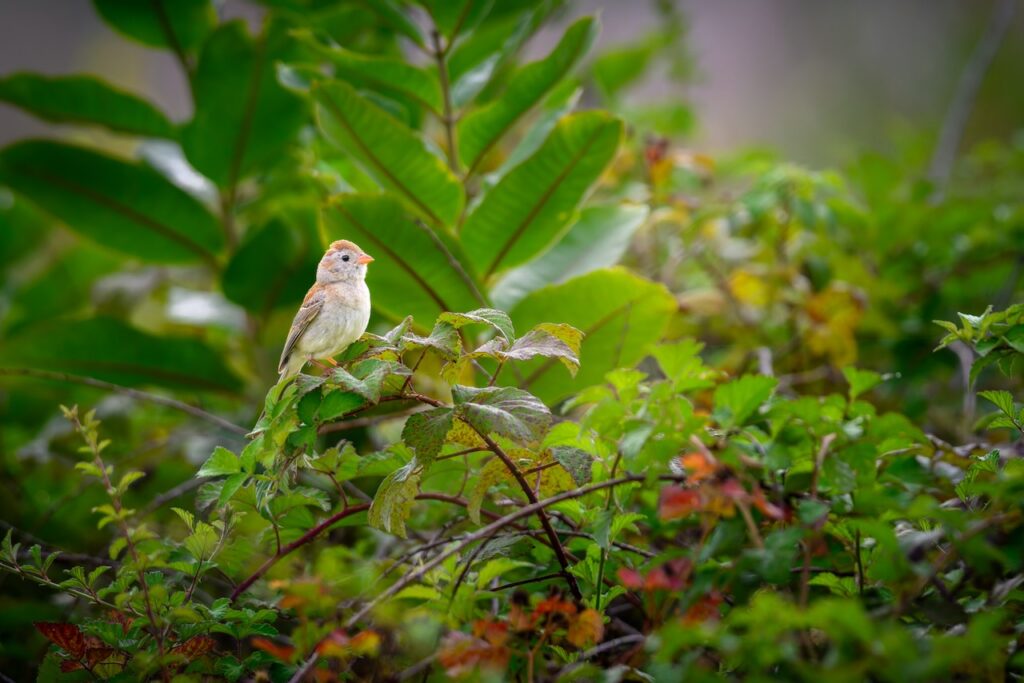
Sparrow in an environmental habitat.
Finish with Restraint
In Lightroom, I adjust light, color, and contrast to help the bird stand out. I prefer to preserve the scene I photographed and improve my choices in the field. Nothing compares to seeing the bird, background, light, and pose come together. Those moments make all the near misses worthwhile.
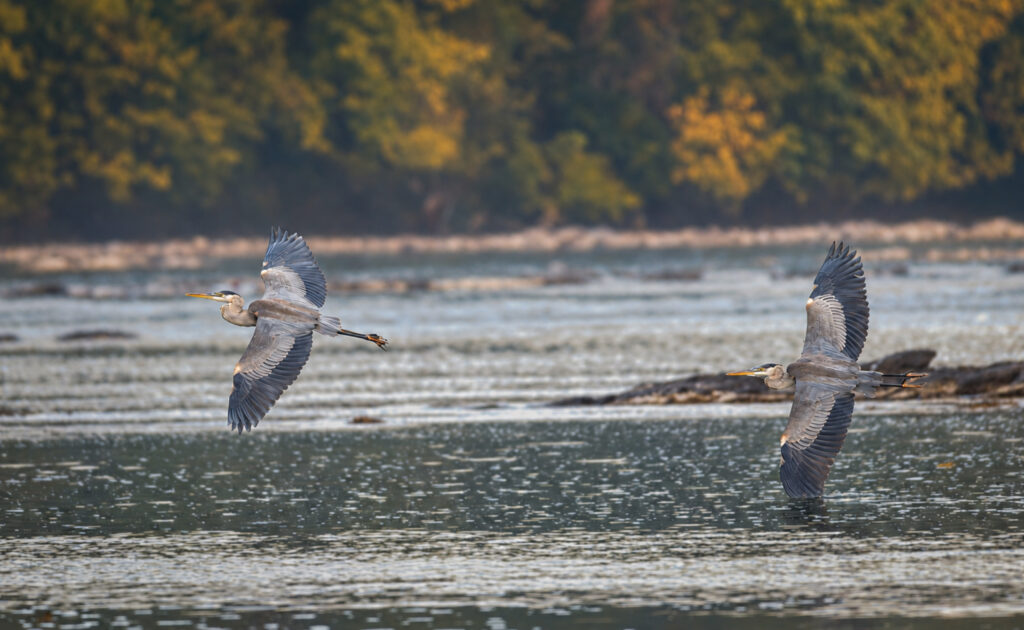
I try to visit Shannondale Springs along the Shenandoah River at least once a week. Great Blue Herons, eagles, ducks, and the occasional kingfisher keep me coming back. This morning’s forecast called for overcast skies, but I was greeted by patches of sunshine. Fog along the drive had me wondering whether I’d be fogged out again, as I was last week, but the river was clear. I settled onto my favorite rock and waited. Two Great Blue Herons flying together gave me a few fun photographs, followed by a flock of ducks heading west along the river. It’s never a bad morning when I get to spend it sitting above the Shenandoah.
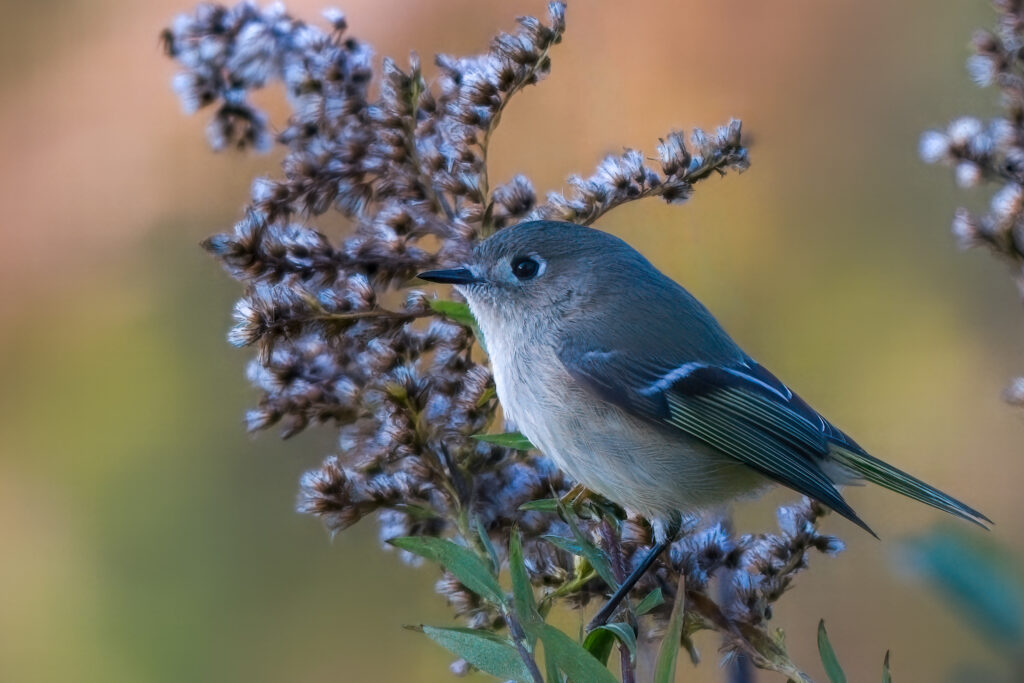
I returned to the State Arboretum of Virginia this morning—the place I’ve called “Mockingbird Alley” in an earlier journal entry. At sunrise, I set up my monopod in my usual spot and waited. After 20 minutes, several mockingbirds perched high against the sky. I took a few photographs but kept only one. Half an hour into the outing, I moved to my next regular spot and found nothing. Rather than keep waiting, I explored more of the property and discovered a meadow where Ruby-crowned Kinglets and bluebirds perched on small trees and wildflowers. Not a mockingbird in sight! I spent half an hour photographing them and came away with several keepers. None made the portfolio, but I found a promising spot to revisit. Today’s lesson: familiar places still have something new to offer if I’m willing to explore.
Ruby-Crowned Kinglet – Camera Settings: 1/3200s at f/6.3, 600 mm, ISO 4,000, 0 EC
Birds are fast, agile, and unpredictable. But one of my biggest challenges has been getting their exposure right. On my outings, birds move between water, shaded trees, and open sky. The light changes, too. A setting that works one moment can make the next photo too dark or wash out detail in white feathers. I’m still learning, but here’s what has helped me.
My Starting Point
I shoot in manual mode with Auto ISO, I keep my aperture wide open, and set an ISO ceiling of 12,800. At dawn, I sometimes use shutter speeds slower than 1/1000s, accepting the risk of motion blur. As the light improves, I work toward 1/3200s–1/4000s for birds in flight. Once I’m happy with my shutter speed, I adjust exposure primarily through exposure compensation. With Auto ISO, the camera changes ISO while I retain control of shutter speed and aperture, within the camera’s ISO limits.
When the Meter Gets Fooled
When I started photographing birds, I assumed the camera would handle exposure. I concentrated on framing and came home with dark birds against bright skies and white birds with blown highlights.
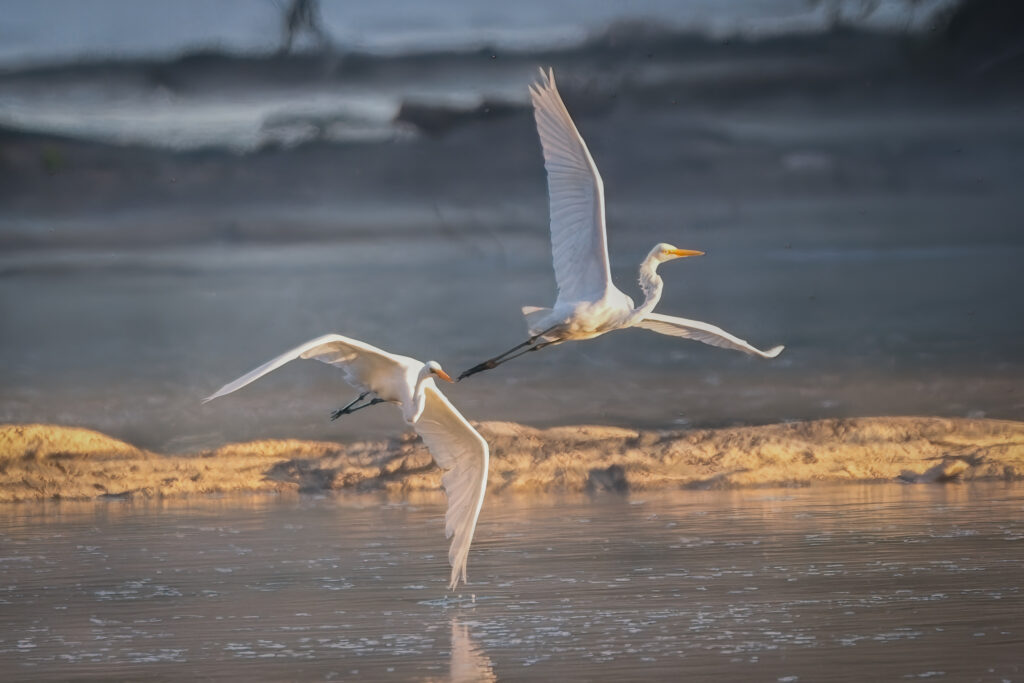
1/2500s at f6, 470mm, ISO 5000, 0 EV – blew out the neck of the egret to the right
1/800s at f6.3, 600mm, ISO 560,+ 2.67 EC – still too dark
The meter evaluates reflected light, and a bright background can leave the bird underexposed. Getting the exposure right is only part of the challenge. I’ve also written about finding birds and getting them in focus at 600mm. Here are the five things to consider:
Metering: Center-weighted metering helps when the bird occupies much of the center. A small bird surrounded by sky may still need compensation.
Positive exposure compensation: Brighten the bird, but watch for clipped highlights.
Light direction: When possible, stand with the sun behind you to light the bird.
RAW capture: Give yourself more flexibility when editing.
Slower shutter speeds: For a relatively still, perched bird, slowing the shutter lets Auto ISO drop. This can improve image quality and dynamic range, as long as the bird stays sharp.
1/3200s at f6.3, 600mm, ISO 8000, +2 EC – sky looks good and bird is exposed properly
1/400s at f6.3, 600mm, ISO 100, -2.33 EC – background goes dark, but saved the bird from blowing out
Protecting Feather Detail
Against shaded trees, white plumage can become overexposed.
Watch the histogram and check the brightest feathers, aiming to preserve detail without clipping important highlights.
Lower exposure using exposure compensation
Highlight-weighted metering can help protect bright plumage, although the bird may still need exposure adjustments. If your camera doesn’t have highlight-weighted metering, use center-weighted. Also, reflections on water can influence the reading, so I check the subject itself.
RAW files offer editing latitude, but you can’t reliably recover truly clipped feather detail. I learned that lesson the hard way.
Reacting Faster
On my Nikon Z8, I’ve assigned the video-record button to recall highlight-weighted metering and −1 stop of exposure compensation. It’s a starting point for bright birds, not a guaranteed setting. For birds against bright skies, I’m practicing adding positive compensation when needed. I may create a second shortcut for those situations. Bird photography remains a work in progress. Learning from missed shots—and occasionally getting everything right—is part of what keeps me coming back.
I arrived at Shenandoah University River Campus in the western part of Virginia at 7:30 this morning, right at sunrise, although the sun wouldn’t clear the eastern mountain until 8. It was a brisk 40 degrees, and my thin wool gloves made working the controls on my Nikon Z8 awkward but manageable, much like my recent outing at Stauffer’s Marsh. The campus sits along the Shenandoah River, but today I focused on the meadows. There was plenty of bird activity, though the birds kept frustrating me by diving into the undergrowth. I missed a shot of a Great Blue Heron flying overhead. I failed to increase my exposure compensation fast enough to expose for the bird and not the sky. I didn’t take my own advice. With some patience, I managed a few nice bluebird photographs.
The meadow. Plenty of undergrowth for the birds to hide.
I managed this shot of a Bluebird. Camera Settings: 1/1000s @f/6.3, 600mm, ISO 10000, 0 EC
I arrived at Shannondale Springs Wildlife Management Area at 7:30 this morning, right at sunrise. It was a brisk 40 degrees, and thick fog covered the river, limiting clear visibility to about 10 feet. I should have anticipated it—cold air over relatively warm water can create these conditions. I decided to wait for the sun to clear the fog, although the mountain east of the river keeps it out of view until around 8. By 9, the fog had lifted, but I was uncomfortably cold, especially my feet. I gave it another half hour, hoping for some bird activity, then packed up without a photograph. Some mornings offer more waiting than opportunities. Thankfully, they’ve been few and far between.
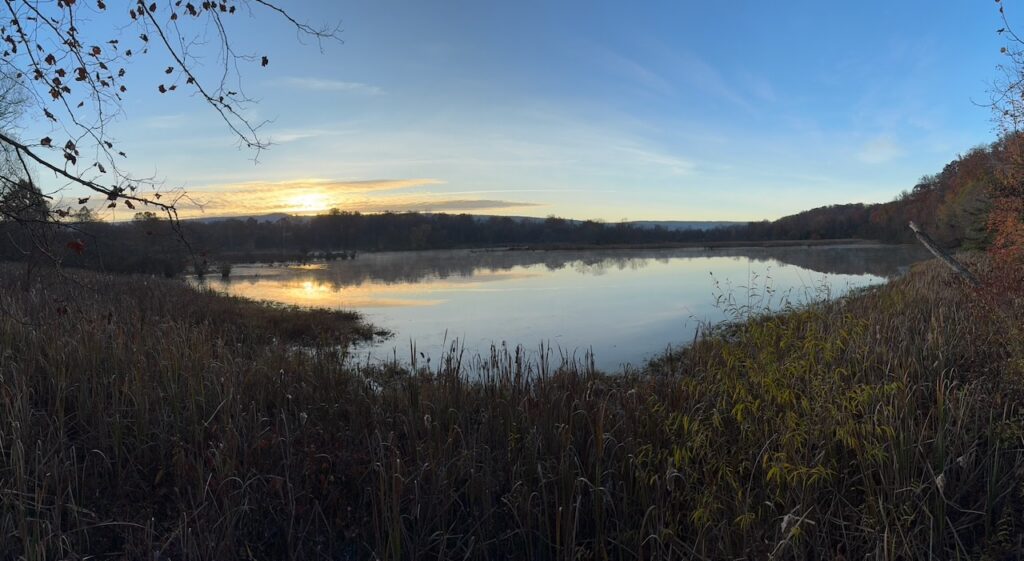
I arrived at Stauffer’s Marsh just after sunrise, later than my usual dawn start after underestimating the 40-minute drive. It was a brisk 38 degrees under clear skies, with fog covering the pond. Two Great Blue Herons flew past the western overlook, but at 1/800s my Auto ISO hit its 12,800 ceiling, leaving the birds too dark despite positive exposure compensation. Then a splash caught my attention: a kingfisher emerged from the water and perched nearby. In my excitement, I forgot to reduce exposure compensation and overexposed the shot. There were Canada Geese floating in the fog. I made a couple of nice shots of them. The meadow, usually unproductive for me, offered a welcome surprise—several birds perched in view, and this time I got the exposures right. Farther along, the usual Gray Catbirds were absent from the thickets; perhaps they’d moved south. At the pond’s eastern edge, a Great Blue Heron stood above a beautiful reflection, growing comfortable with my presence after an initially nervous greeting. I left pleased with the meadow, but still replaying that kingfisher opportunity.
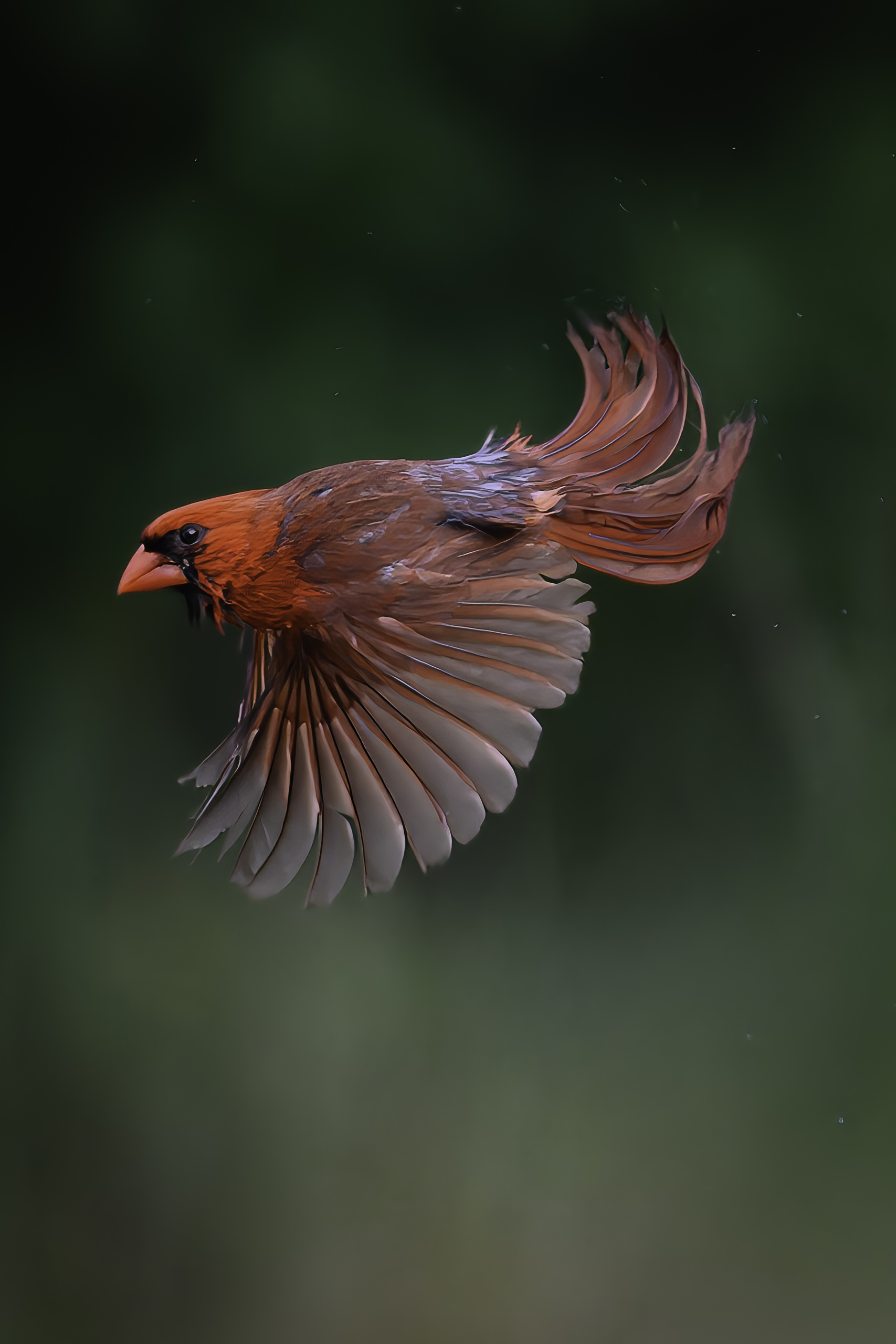
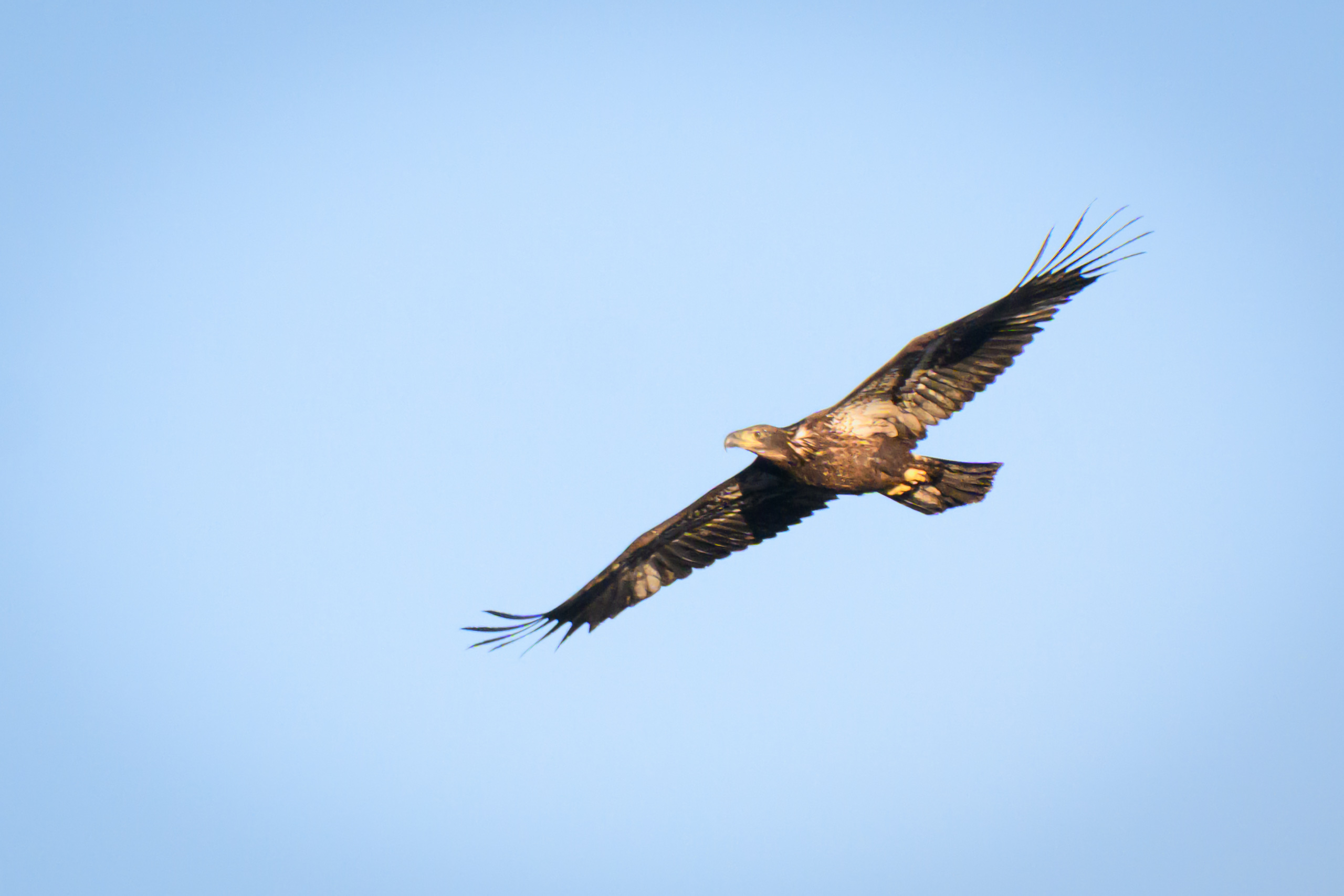
Camera settings: 1/4000s at f6.3, 320mm, ISO 450, 0 EC