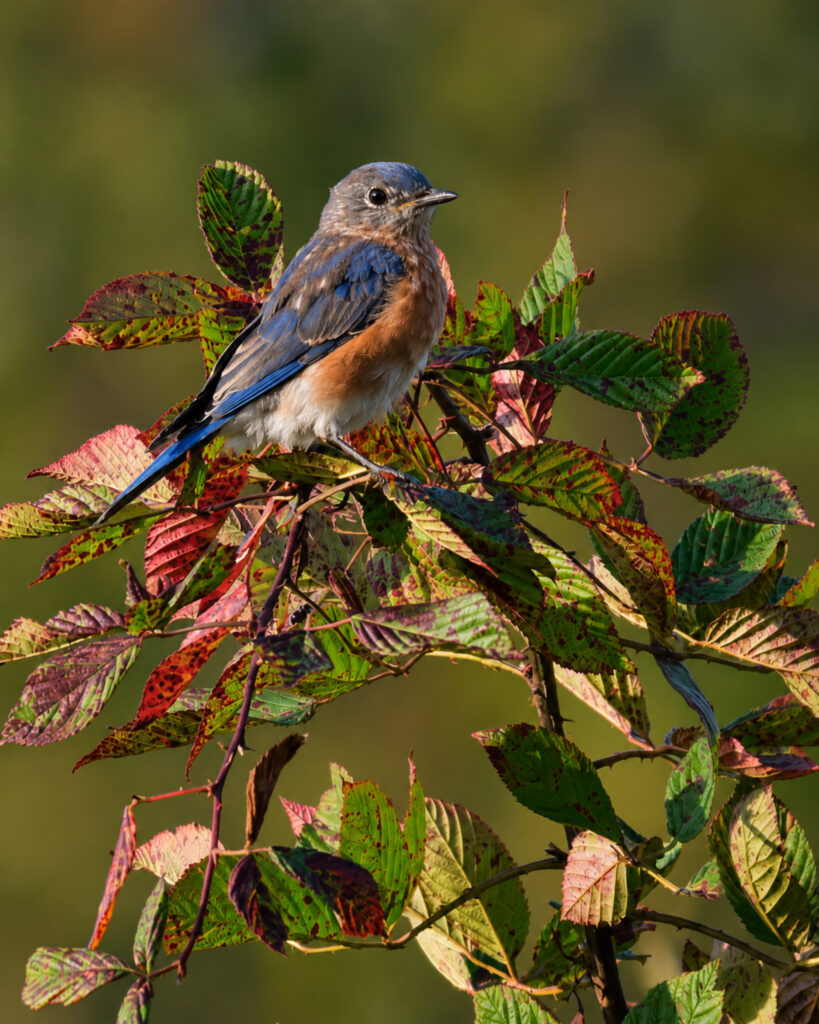
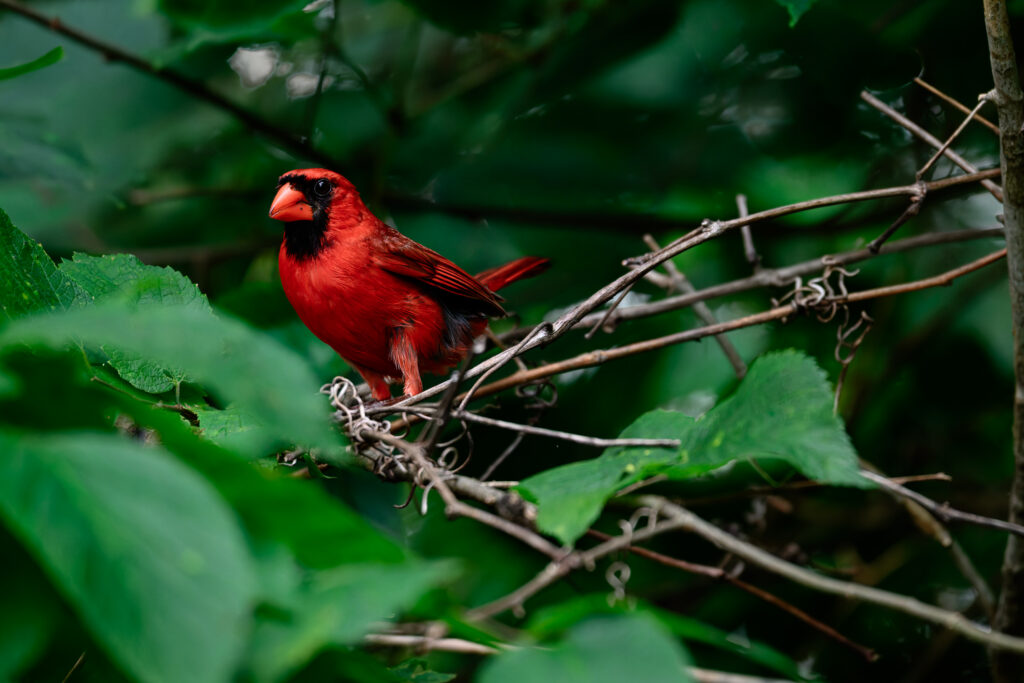
Yesterday morning’s forecast called for rain. I decided I would do a little bird photography anyway, getting up before sunrise to visit the State Arboretum of Virginia in Boyce, Virginia. It turned out to be a beautiful morning. The Arboretum is one of four birding spots I visit regularly, and I call it “Mockingbird Alley” because there are so many mockingbirds. As expected, I came home with plenty of mockingbird photos, along with a decent bluebird photograph and a couple of keepers overall. The nice thing about returning to a familiar place is learning where to find the birds—and I’m convinced they’re getting used to me, too.
Have you purchased—or are you considering—a 600mm lens for bird photography? A few techniques can help you find birds faster and bring home more keepers. Here are three considerations that have helped me in the field.
Shutter Speed
Match your shutter speed to the bird’s movement. For a large bird in flight, such as a Great Blue Heron, 1/1250s can be a starting point, with faster speeds offering more protection against motion blur. For fast-moving songbirds, try 1/2000s or, when the light allows, 1/3200s.
For hovering hummingbirds, 1/4000s to 1/8000s can reduce wing blur, although even these speeds may not freeze every wingbeat. Perched birds often allow much slower shutter speeds. For something creative, try panning with a flying bird at around 1/60s. Expect plenty of misses, but a successful frame can combine a blurred background with a strong sense of movement.
ISO
Bird photography has taught me to embrace high ISO. Early morning and evening light can produce beautiful photographs, but combining low light with fast shutter speeds challenges any camera.
I use manual mode with Auto ISO. I choose the shutter speed and aperture, let the camera adjust ISO, and use exposure compensation to brighten or darken the image. Managing one exposure adjustment helps me react quickly.
My Auto ISO ceiling is 12,800. Once the camera reaches that limit, positive exposure compensation cannot increase ISO further. If the photograph is still too dark, I need to slow the shutter, open the aperture if possible, or raise the ceiling. Noise reduction can help, but results depend on the original photograph. Several images in my other articles (Great Blue Heron in near darkness in this article) were taken at ISO 12,800; you’ll find the settings beneath the photos.
Finding the Bird
At 600mm, the narrow field of view can make locating a small bird frustrating—especially when it’s flying. With a zoom lens, start wider. I usually find the bird at around 300mm, then zoom toward 600mm while keeping it in the frame. If I’m struggling, I zoom out farther. Branches can also distract autofocus. A single-point AF area can help you target the bird more precisely. If autofocus still struggles, manually focus close to the bird’s distance, then try autofocus again.
1/2000s at f6.3, 600m, 12800 ISO, 0 EC
These techniques take practice. Getting comfortable with the controls means spending less time searching and adjusting—and more time ready for the photograph.
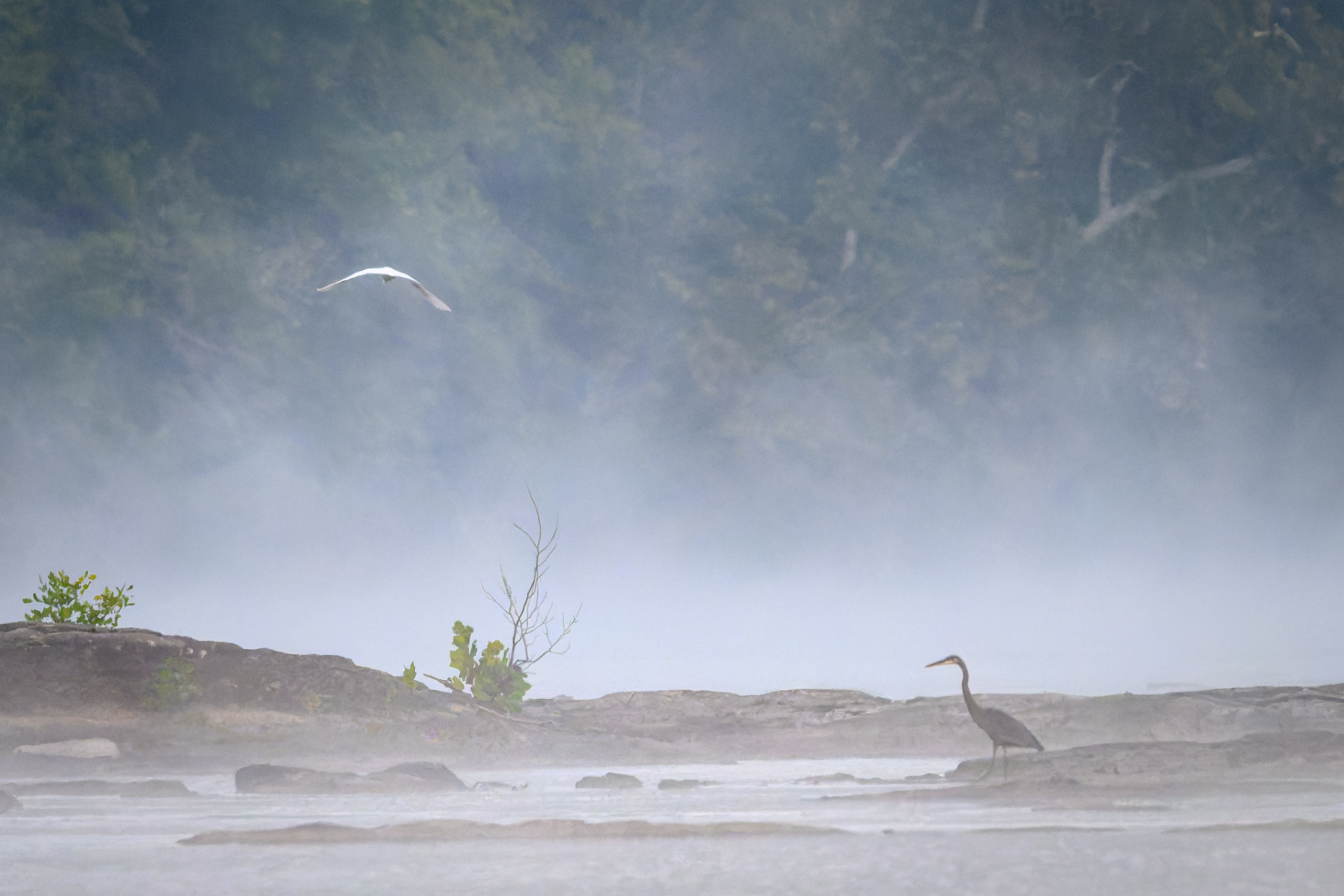
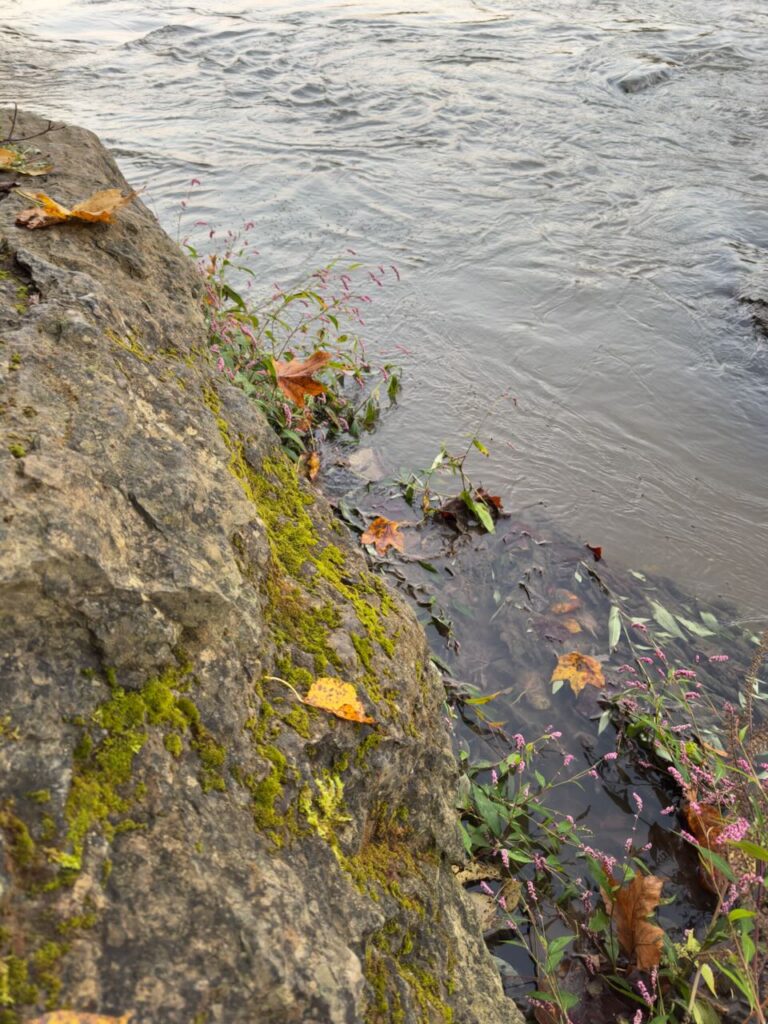
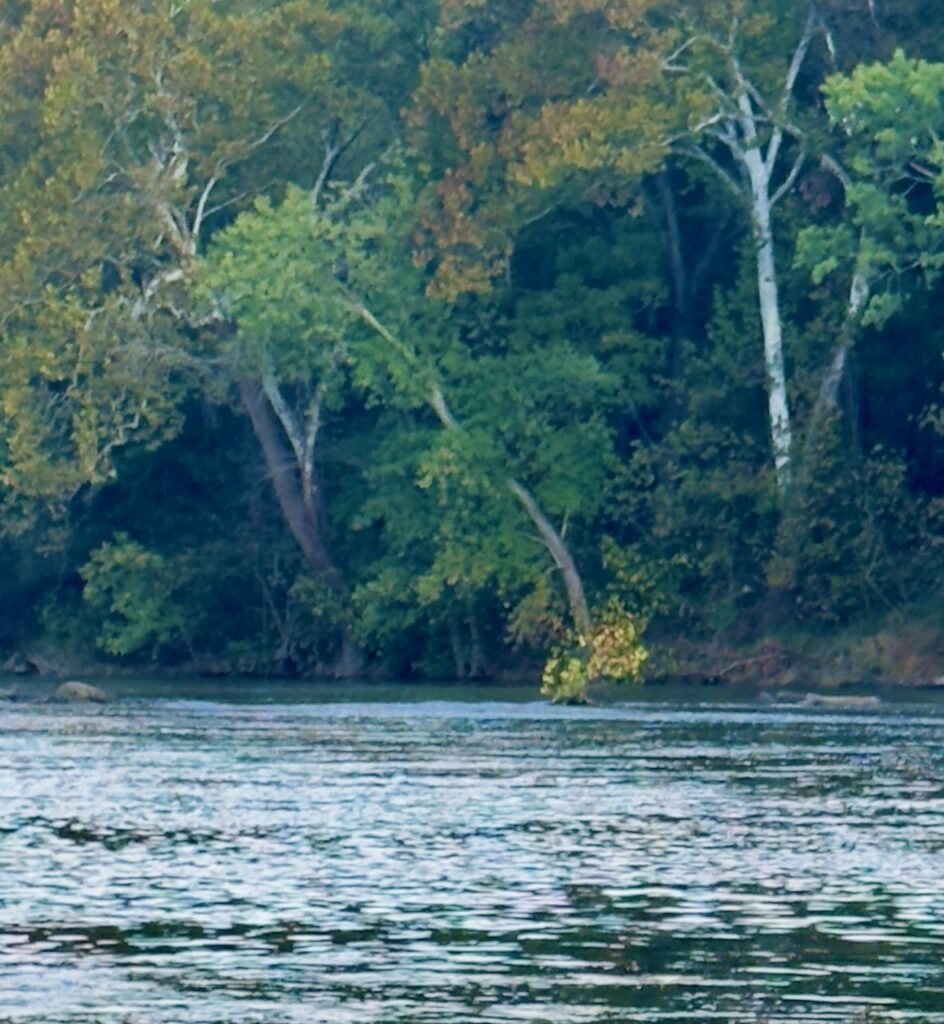
Nature caught me by surprise this morning, as it tends to do. While I was in Maine for a long weekend, nearly two inches of rain fell across the Eastern Panhandle of West Virginia. When I returned to Shannondale Springs near Harpers Ferry, I found the Shenandoah higher than I’d ever seen it. The water had reached the boulder where I usually sit and wait, and the rock ledge where Great Blue Herons and Great Egrets hunt for fish was submerged, with only a small tree visible above it. The high water changed my usual approach to photographing birds. Rather than starting with a fairly neutral exposure and adjusting quickly as birds moved between backgrounds, I set my exposure for birds against the sky and was able to leave the settings alone. I came away with a couple of keepers. I’ll give the river time to settle before returning.
I’m located about eight miles from the Virginia border, so I have a couple of favorite birding spots just east of the West Virginia state line. One of them is the Shenandoah Cool Spring River Campus.
The campus is about four miles east of the state line in Bluemont, Virginia, along the Shenandoah River. Its 195 acres support an abundance of wildlife, including Great Blue Herons, Bald Eagles, ducks, cormorants, Red-winged Blackbirds, White-tailed Deer, and many smaller animals. In addition to the river, several ponds are scattered across the property, and that’s where I found myself one mild morning in July.
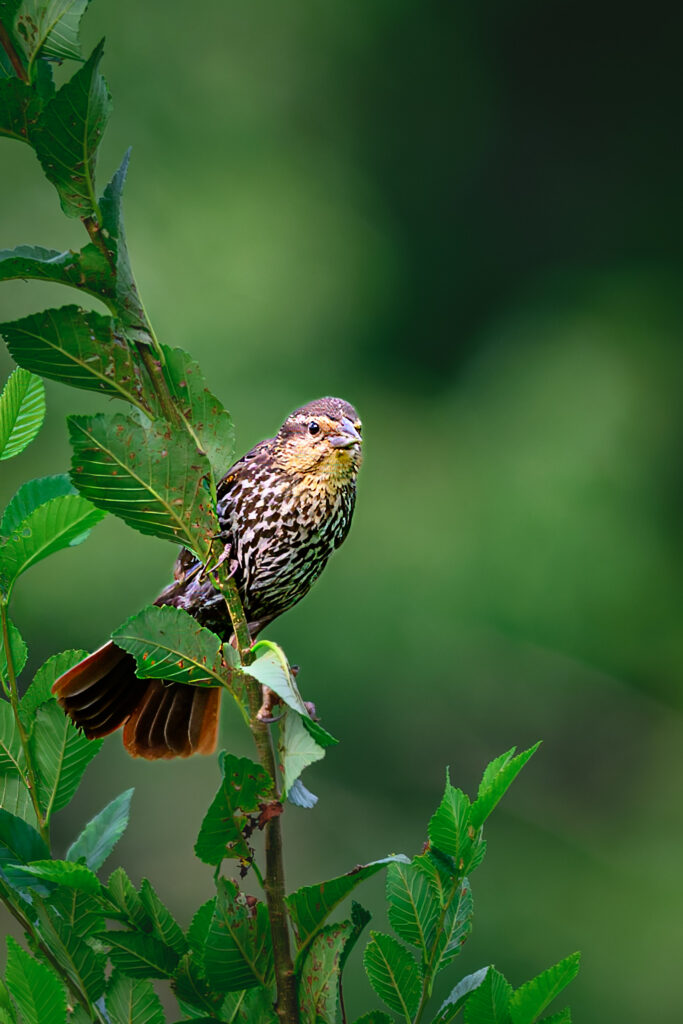
1/2000 at f6.3, 510mm, ISO 1250, 0 EC
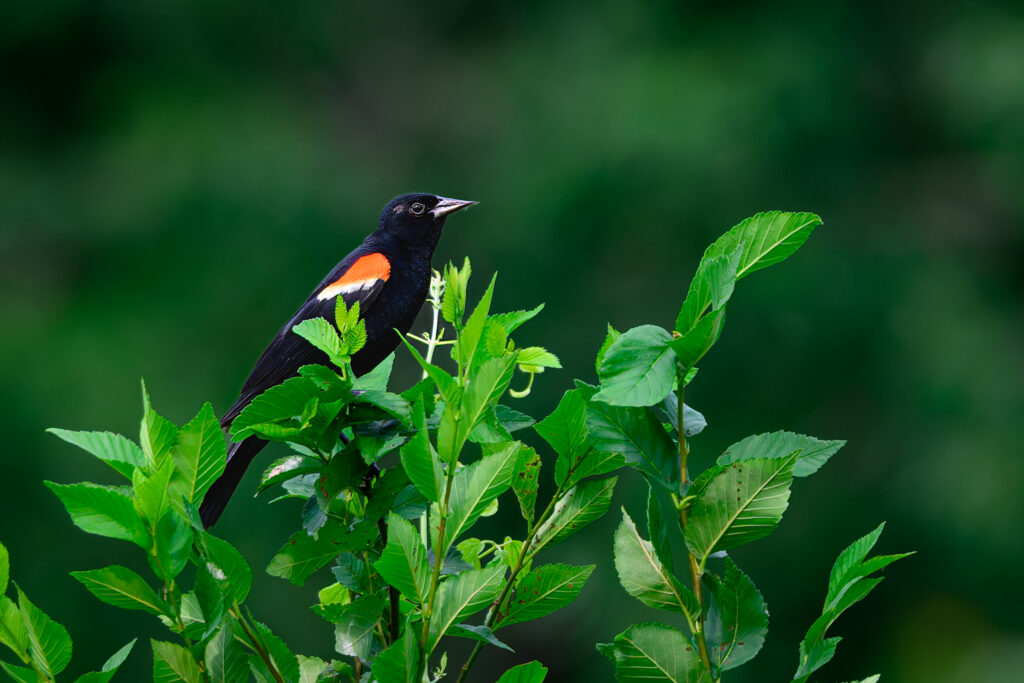
1/3200 at f6.3, 430mm, ISO 2800, 0 EC,
Heading northwest along the property, just off the paved cart path, is the smallest pond on the campus. I had visited it a couple of times before and made some nice photographs of male and female Red-winged Blackbirds. That morning, I positioned myself about 25 feet from a small tree to my right. It looked like the kind of place a bird might choose for a perch.
I checked my watch and decided to stand still for at least half an hour to see what might happen. I could hear ducks moving through the tall marsh grass and reeds around the pond, but they never showed themselves.
After half an hour, I looked over at the little tree to my right as though it had somehow failed me. Then, almost by instinct, I glanced over my right shoulder toward the clear blue sky.
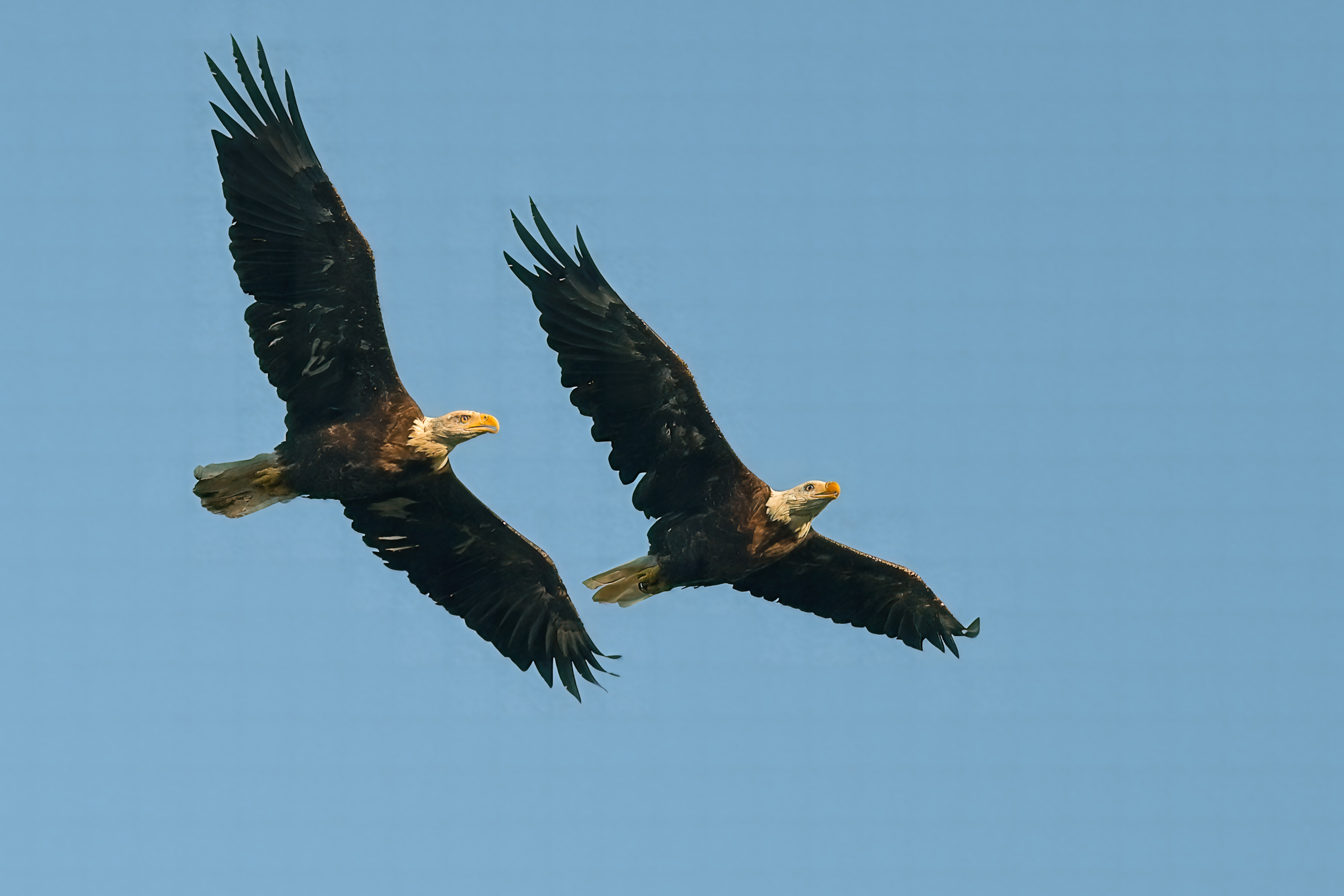
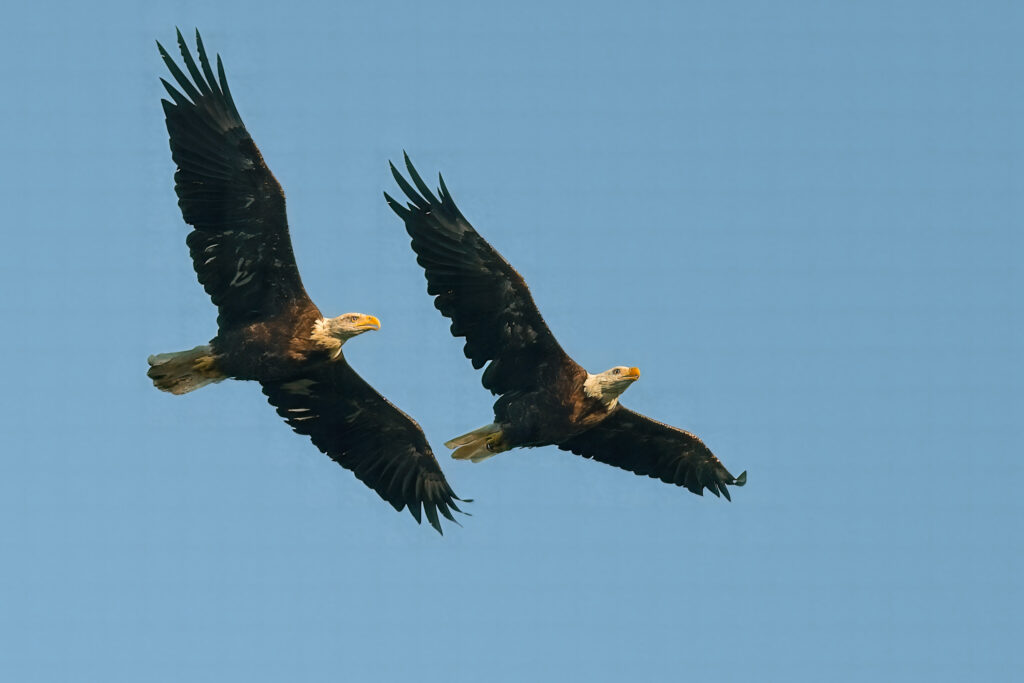
Two Bald Eagles were flying together in near-perfect formation.
Camera settings: 1/2500 at f6.3, 580mm, ISO 640, 0 EC
I quickly raised my camera and began firing off frame after frame. I could hardly wait to get home and see the photographs on a large screen.
Once home, I went straight to my office and uploaded the images. One photograph immediately stood out. The two eagles were almost perfectly aligned, their wings stretched into nearly identical positions as they glided across the blue sky.
The pond may not have given me what I was waiting for that morning, but the sky gave me something far better.
I’ve never been a patient person. I feel a strong sense of urgency, get frustrated by delays, and often expect immediate results.
Bird photography is teaching me to slow down. In the field, I can stand still for a long time and wait for a bird to come closer. There’s no guarantee it will happen, and I’m learning to be okay with that. A recent morning at Stauffer’s Marsh Nature Preserve put that lesson to the test.
Stauffer’s Marsh is a 46-acre wetland preserve in Berkeley County, West Virginia. Its ponds, meadow, and trails give bird lovers plenty of places to stop and look. I arrived just before sunrise and headed to the pollinator meadow first.
The meadow was overgrown, with large trees around its edges. I like to find a spot, stand quietly, and give the birds time to get used to me. I returned to the meadow twice that morning and spent more than an hour there. I heard Gray Catbirds calling nearby, but I couldn’t get a clear view of one. Eventually, I moved on, disappointed.
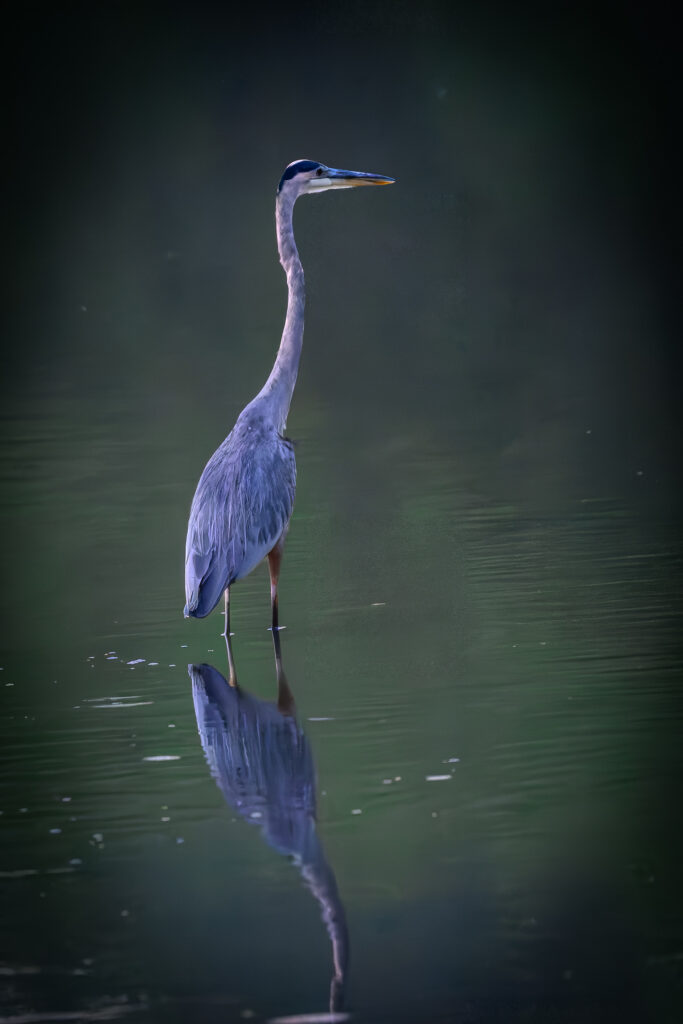
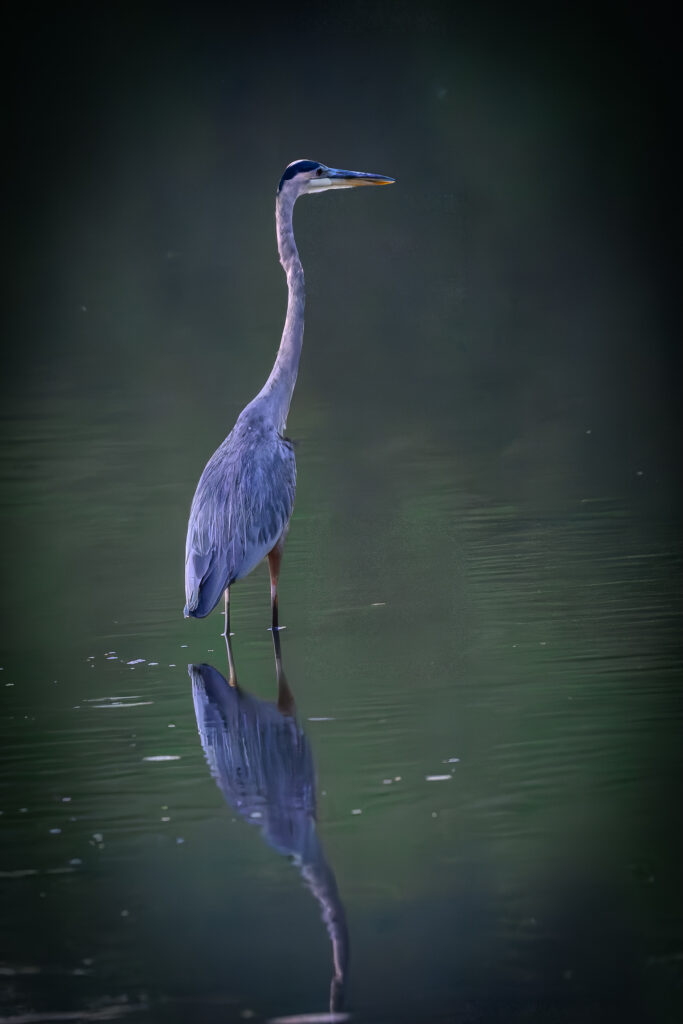
At an overlook along the West Pond Trail, I spotted a Great Blue Heron reflected in the water. The sun was just rising above the trees. I made a few photographs that seemed promising, though I wondered whether I’d had enough light for a clean image. After another half hour with little activity, I headed toward the Connector Trail.
1/800 at f6.3, 600mm, ISO 12800, 0.67 EC
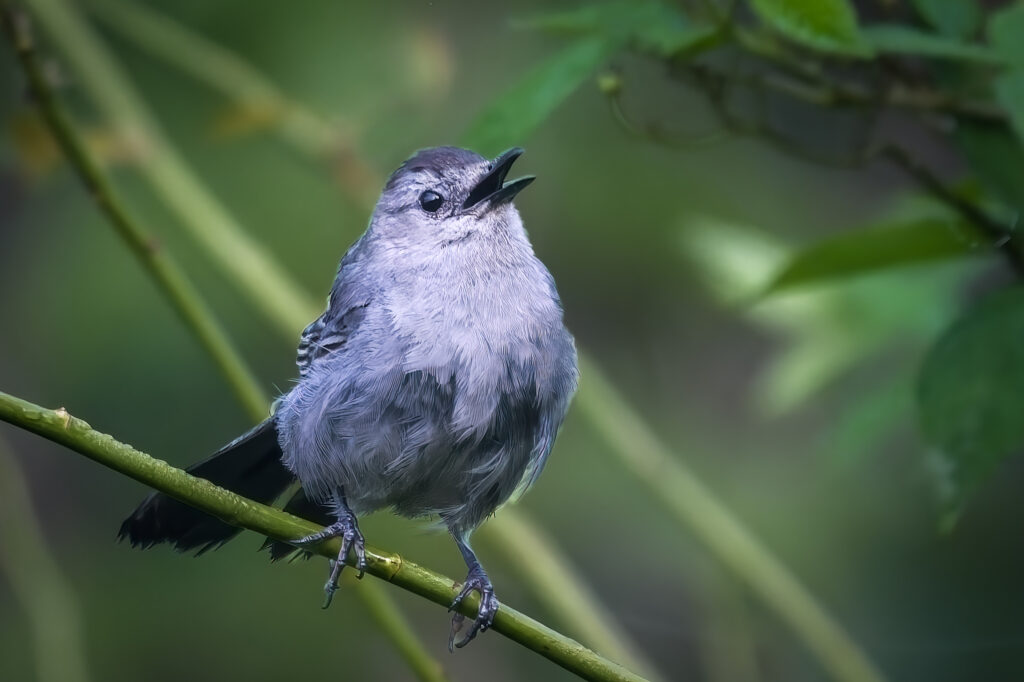
There, among low vegetation, thick shrubs, and tangled vines, I finally found the Gray Catbirds. I had been walking and waiting for more than two hours and had only one potentially good photograph to show for it. I took shot after shot, trying to find a clear opening through the branches.
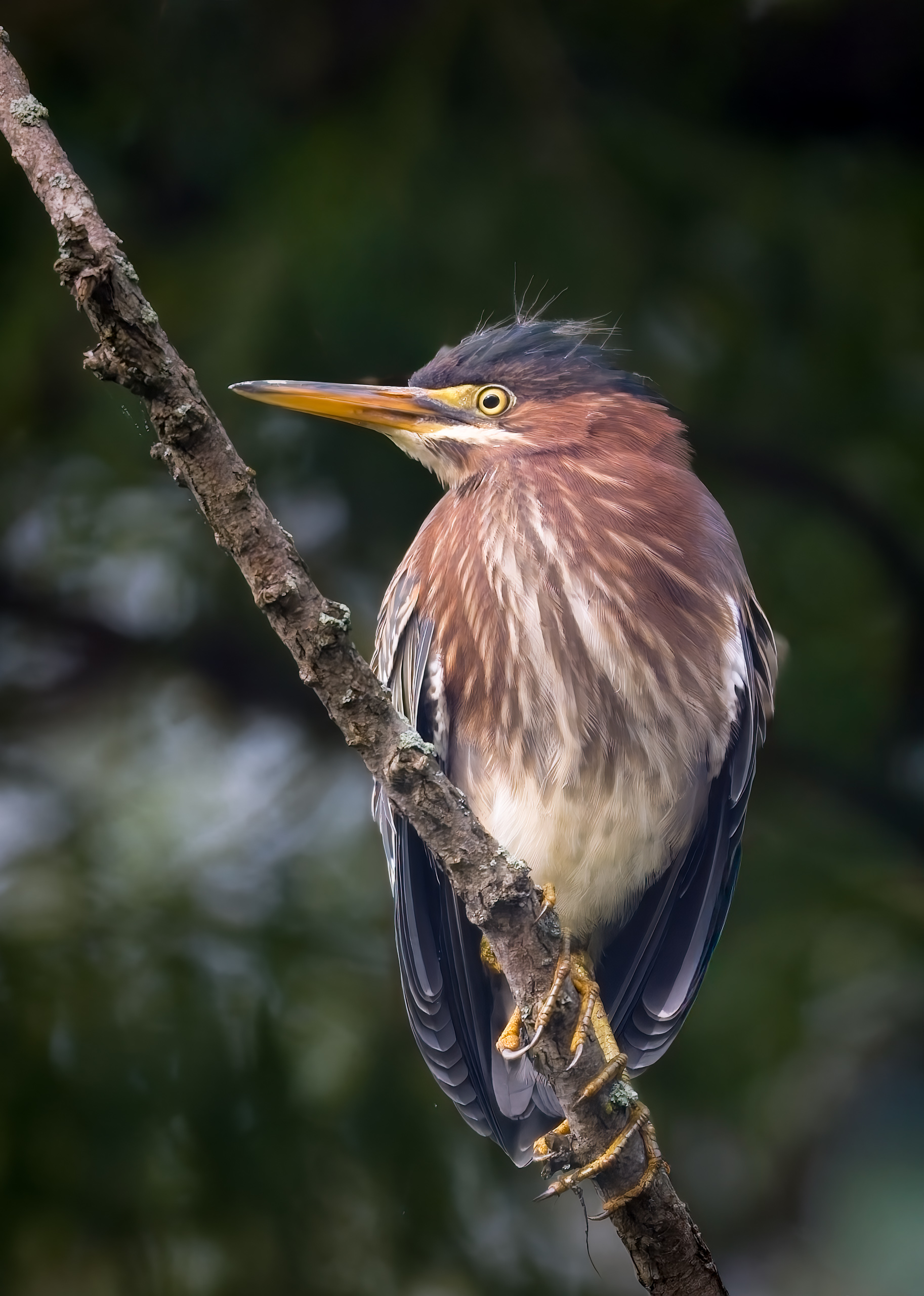
1/2500 at f6.3, 600mm, ISO 5000, 0 EC
Then something flew over me: a Green Heron. It landed on an angled branch in a tree about 30 feet away. I expected it to notice me and leave, but it stayed long enough for me to move around the tree and find a better angle. I missed the flight photograph, but I knew I had captured the heron on its perch.
I left Stauffer’s Marsh nearly three hours after I arrived. The catbirds had drawn me down that trail, and the Green Heron had appeared while I was still working for a clear shot. I’m glad I was patient, and I’m glad I stayed.
It’s one of my favorite places: sitting on a boulder with my feet dangling over the Shenandoah River in the Eastern Panhandle of West Virginia. I’m far enough from the outside world that the only sound is the river flowing beneath me.
It’s not quite sunrise. Looking toward the mountain to the east, I see the beginnings of red, orange, and yellow light as the sun approaches the horizon. I wait with my camera in hand, wondering what the morning will bring.
To my left, a small rock ledge reaches out from the riverbank, about 75 feet from where I’m sitting. It’s a favorite hunting ground of Great Blue Herons—or perhaps I should say one particular Great Blue Heron. They often return to productive feeding and roosting areas, and an individual may defend a favorite fishing spot.
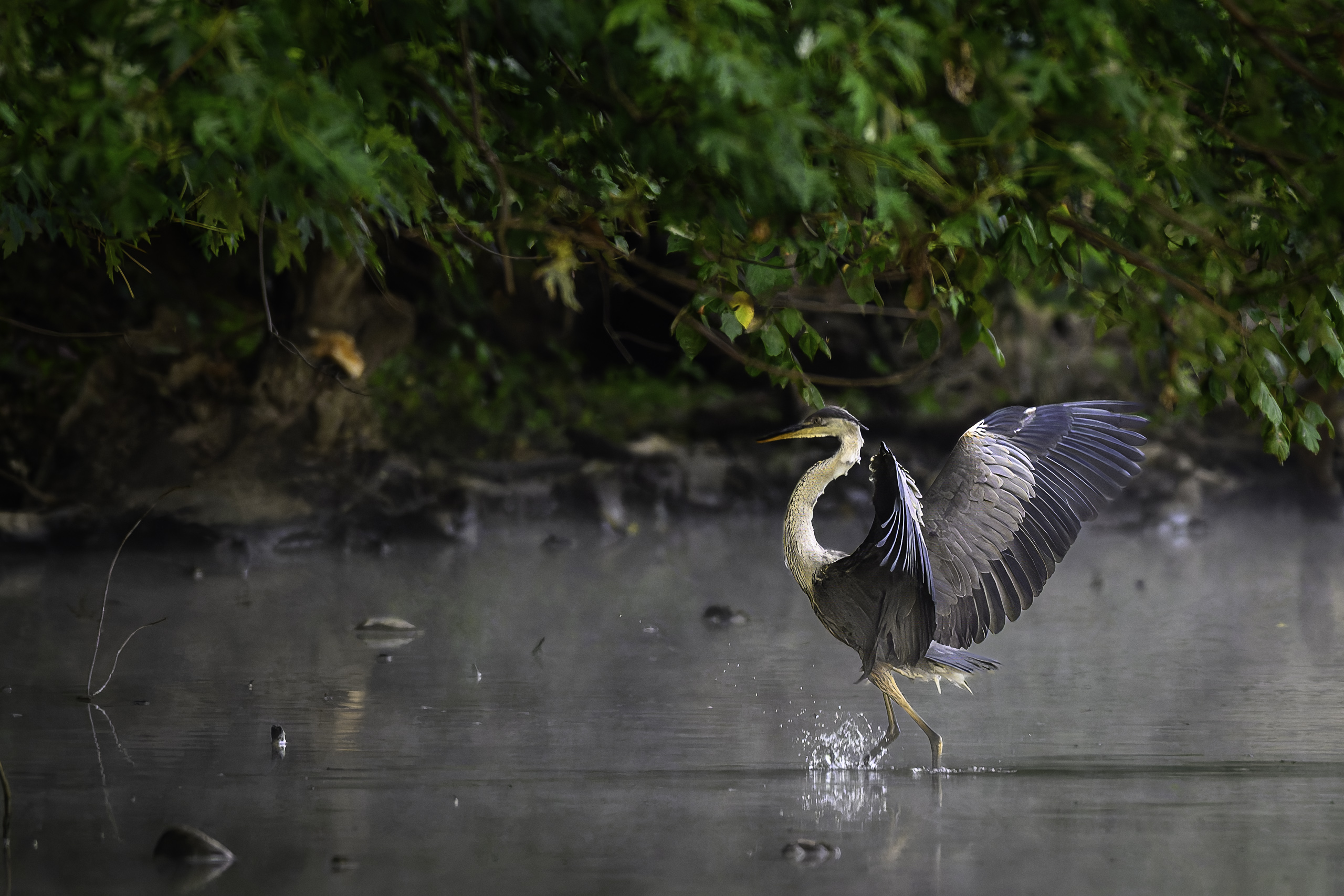
Not long after the sun rises above the mountain, a heron glides toward the ledge. Great Blue Herons are elegant in flight, with their long necks folded into an S-shape and their legs trailing well behind them. Their wingspans can exceed six feet. I photograph the moments before his graceful landing.
He sees me. Many herons would be too skittish at this distance and look for another place to land. Perhaps he stays because of my relaxed posture on the rock, my stillness, or my apparent lack of interest in him. Whatever the reason, he goes about his business—and his business is finding breakfast.
Great Blue Heron along the Shenandoah River in western Virginia.1/4000 at f6.3 600mm, ISO 1000, -0.67 EC
Contrary to what many people believe, Great Blue Herons eat much more than fish. Their varied diet can include frogs, salamanders, snakes, turtles, insects, mice, voles, and even the occasional small waterbird or duckling.
I sit and watch as the heron stands absolutely still, occasionally breaking into a slow, deliberate stalk through the shallows. I gradually lift my camera and make a few photographs. They probably won’t be keepers, but the early light looks interesting, and I want to capture the scene.
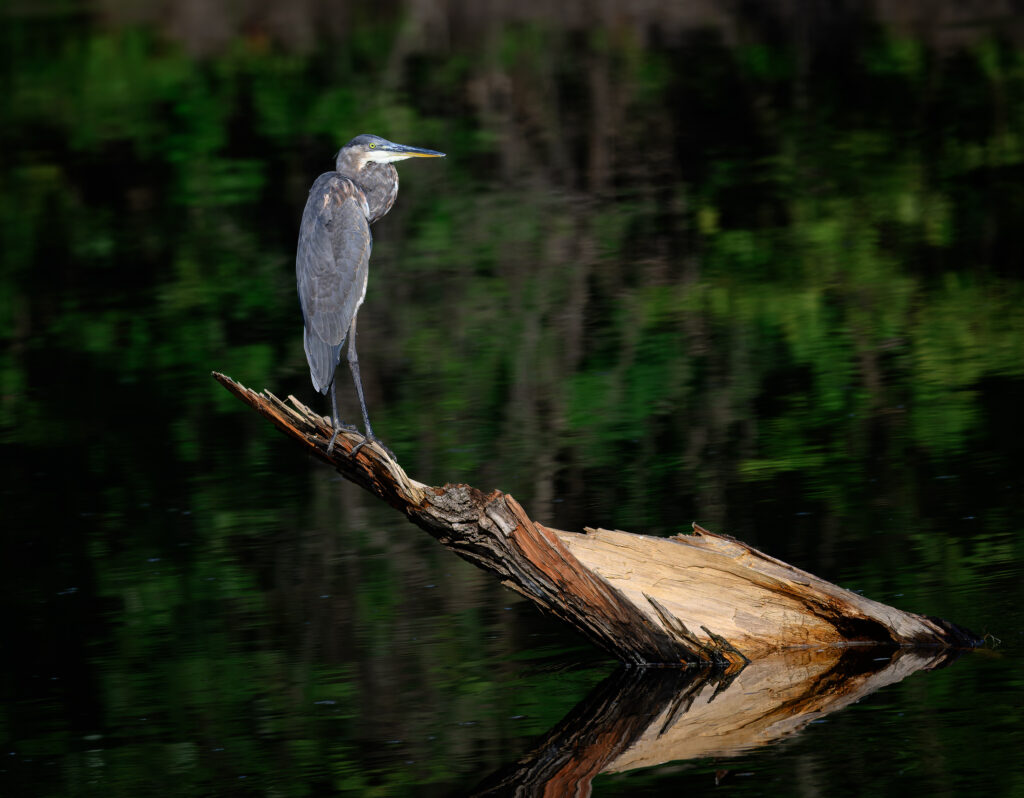
Great Blue Heron at Stauffer’s Marsh Nature Preserve, West Virginia.1/800 at f6.3, 600mm, ISO 12800, -0.67 EC
As the soft morning light becomes more direct, the heron crouches slightly and lifts off over the water, steadily climbing toward his cruising altitude. I remain seated and let my camera do its thing at 20 frames per second.
I hope I’ve captured something worthy of my portfolio. But either way, I’ve enjoyed my morning.
Photo note: The photographs accompanying this story were made during several outings along the Shenandoah River in West Virginia and western Virginia, and at Stauffer’s Marsh Nature Preserve.